


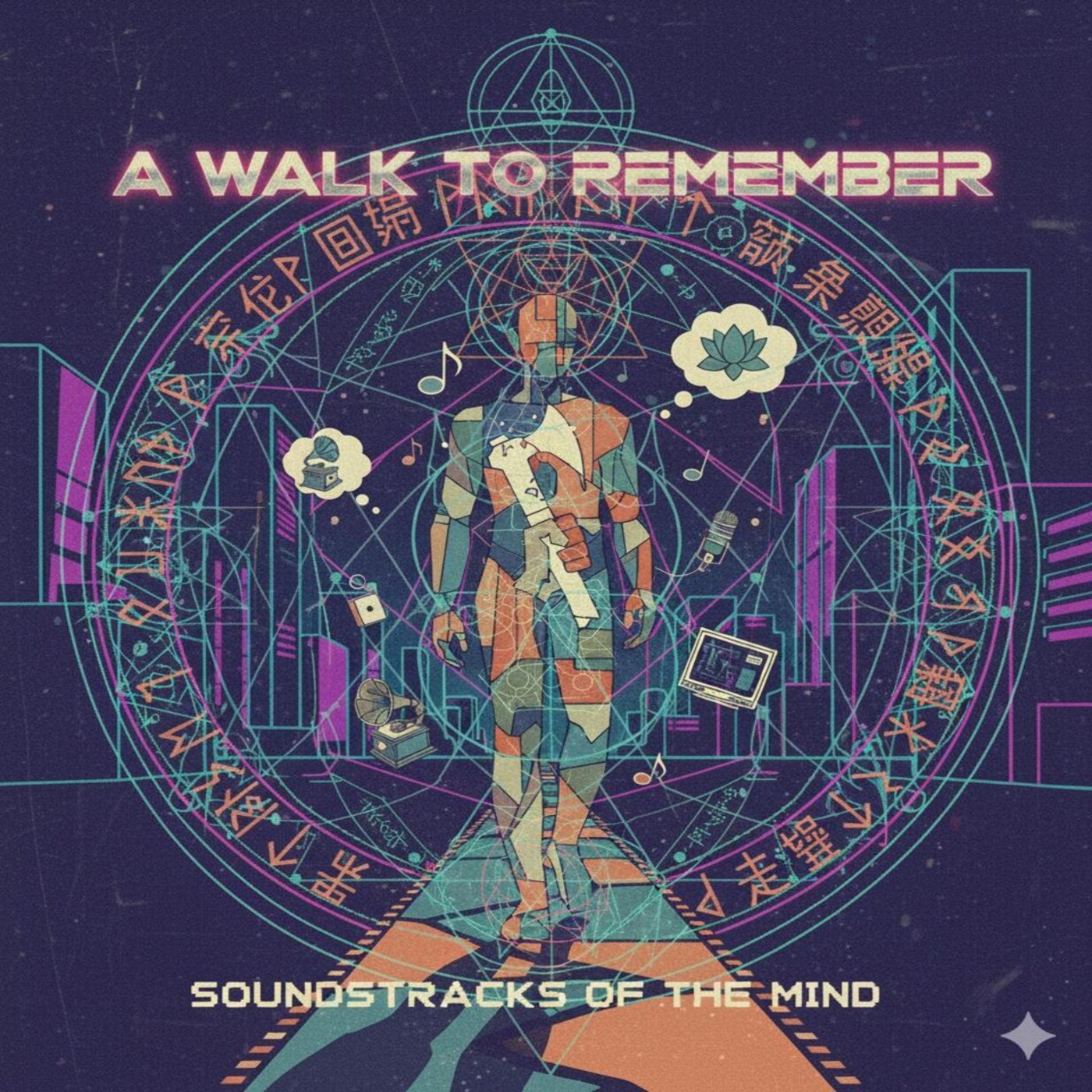

" The Last Night Before Tomorrow "
By Avishek Rakshit
- explicitExplicit
- file_downloadDonwload
- add add to playlist
ABOUT THIS PODCAST
" The Last Night Before Tomorrow "
By Avishek Rakshit
ABOUT THIS PODCAST
All images on this website are exclusive artworks owned by Sonogram and are used exclusively for this site.
Copyright © 2026 Sonogram [OPC] Private Limited (Sonogram). All Rights Reserved.







Episode Description
What happens when Pink Floyd's "Wish You Were Here" becomes a time machine, cracking open eighteen years of buried memories? This intriguing question drives "The Last Night Before Tomorrow," the latest episode of "A Walk to Remember," redefining podcast storytelling. Host Cressida Veil delivers her most emotionally resonant episode yet, weaving neuroscience, music therapy, and raw human experience into a narrative that feels both intimate and universal.
Through Jamie's transformative final night before college—enhanced by altered consciousness—we witness how one song unlocks six pivotal memories spanning a decade. This isn't typical coming-of-age storytelling. Cressida explores the liminal space between adolescence and adulthood, where philosophical questions about presence, absence, and the nature of love collide with the daunting prospect of leaving everything familiar behind. From grief and confusion to teenage heartbreak, each memory creates a sonic archaeology of the human condition.
The episode captures the generational zeitgeist. Whether you experienced your formative years through vinyl, mixtapes, streaming playlists, or TikTok sounds, the premise resonates: music remains our most powerful emotional translator. Cressida's exploration of how classic rock speaks to Gen Z while triggering nostalgic recognition creates a cross-generational dialogue.
What distinguishes this episode is its fearless examination of complex emotional states. Jamie's cannabis-enhanced vulnerability isn't glamorized but treated as a catalyst for psychological exploration. Six memories—from a grandmother's conversations with a deceased grandfather to a father's depression admission—create a kaleidoscopic human experience, acknowledging mental health, family dynamics, friendship evolution, and first love.
Cressida's storytelling mirrors contemporary podcast trends while maintaining literary sophistication. Present-tense narration creates cinematic immediacy, while strategic music integration demonstrates advanced audio storytelling. The episode functions as both entertainment and therapy, offering listeners permission to examine their emotional landscapes through musical memory.
Philosophical depth emerges organically through Jamie's revelations about the nature of wishing. Rather than viewing "wish you were here" as nostalgia or regret, the episode reframes longing as evidence of love's transformative power. This perspective shift—from lack to gratitude, absence to carried presence—offers profound comfort to listeners navigating transitions and losses.
The thrilling element comes from internal recognition. As Jamie's memories unfold, listeners experience exhilarating self-recognition, breathless moments when someone else's story illuminates unexamined emotional history. Cressida creates suspense through psychological revelation, making the ordinary extraordinary.
"The Last Night Before Tomorrow" succeeds because it understands that modern listeners crave authenticity without performative vulnerability. Cressida's warm delivery feels like an intimate conversation with a wise friend. Her ability to discuss depression, substance use, and relationship endings with nuance reflects contemporary awareness, making this episode a must-listen for anyone seeking a deeper understanding of the human experience.