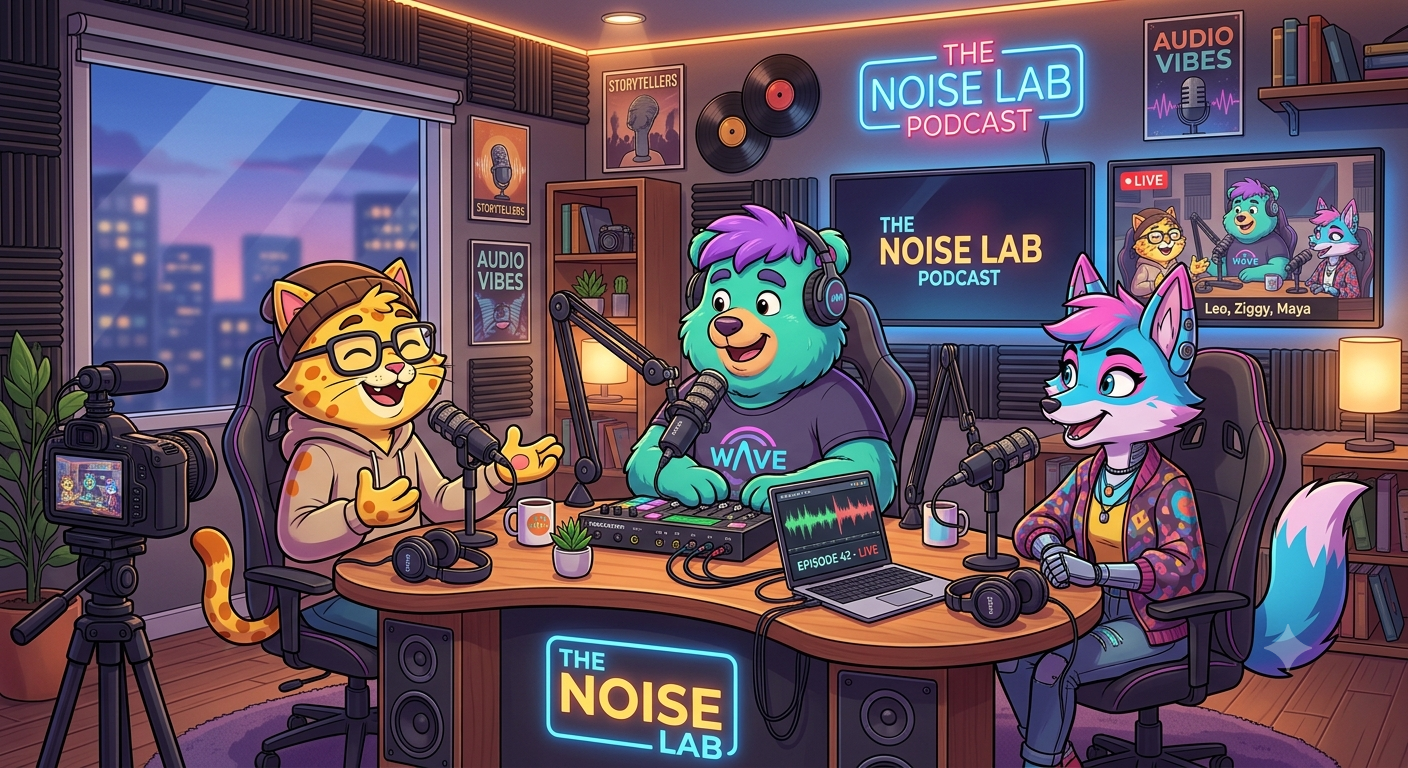
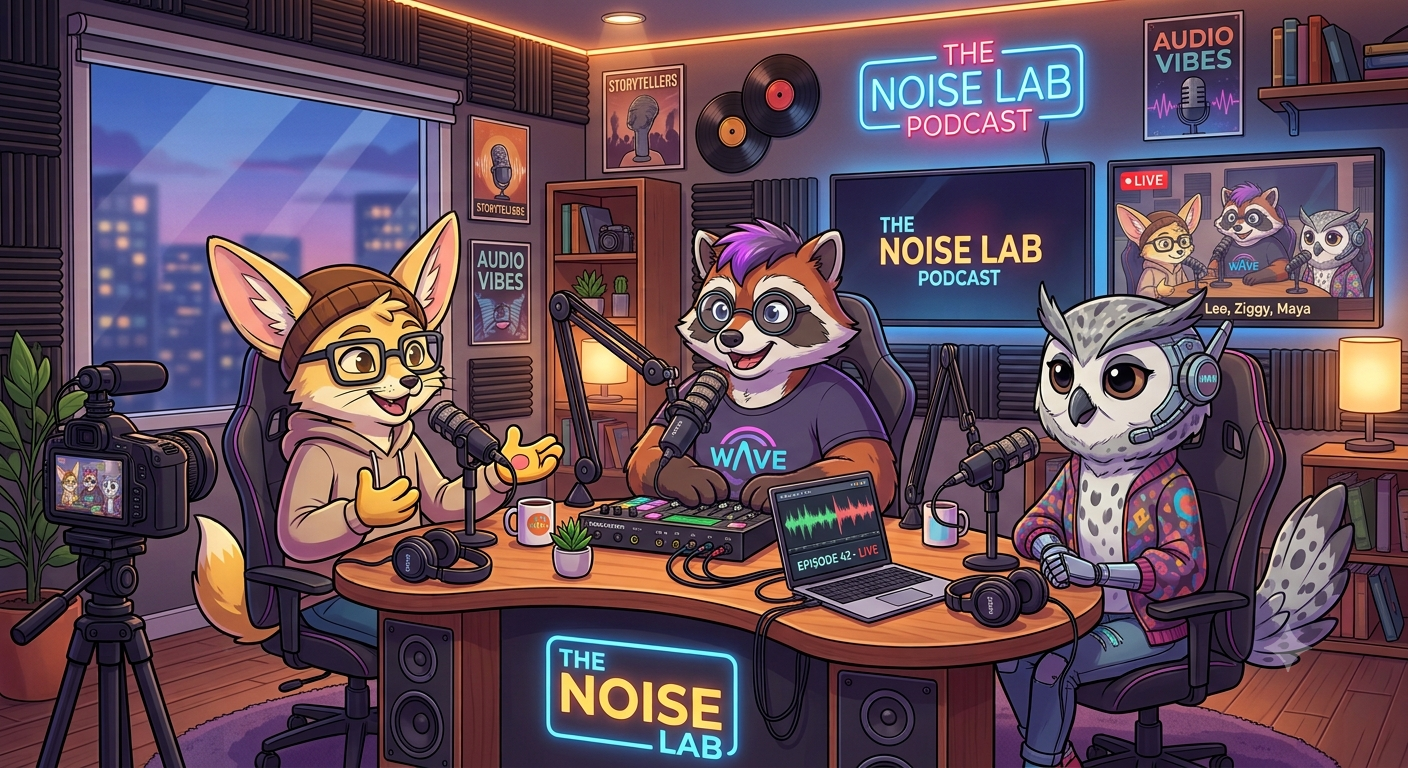
AI Can Make a Podcast. So Why Do We Still Need Humans?
23 Sep, 2026
There was a time when starting a podcast meant buying a microphone, finding a quiet room, learning audio editing and spending an entire weekend trying to remove background noise.
Today, you can do much of that with AI.
Give an AI tool a topic and it can help with research. Ask it for an outline and you have a podcast structure. Give it a few instructions and it can write a script, generate show notes, create social media captions and even produce a synthetic voice.
Then comes the editing.
AI can remove pauses, clean up audio, identify highlights and turn a long conversation into short clips. With the right tools, one person can potentially create an **audio podcast, video podcast and a library of social content without a traditional production team.
So here is the question that is becoming harder to ignore in 2026:
If AI can make a podcast, why do we still need humans?
The answer is not that AI isn't good enough.
In some parts of podcast production, AI is already extremely good.
The answer is that a podcast is not only a production.
It is a relationship.
AI Has Changed the Podcast Production Process
Artificial intelligence is quickly becoming part of the everyday workflow for podcast creators.
AI podcast tools can help with research, transcription, podcast scripting, editing, translation, captions, content repurposing and even audience analysis.
A recent 2026 academic review of generative AI in podcasting describes two broad directions: AI as a productivity tool that assists human creators, and AI as an autonomous system capable of generating and personalizing audio experiences.
That second development is particularly interesting.
Spotify has already introduced Personal Podcasts, where users can generate customized audio based on prompts and personal information such as files or other inputs. Spotify+1
In other words, AI isn't just helping people produce podcasts.
It is beginning to change what a podcast actually is.
A podcast can be produced faster, personalised for an individual listener and adapted to different formats.
For creators, that is an extraordinary opportunity.
But it also raises a deeper question:
When production becomes easy, what becomes valuable?
The Answer May Be Personality
Imagine two podcasts covering exactly the same subject.
Both have excellent sound.
Both have professionally structured episodes.
Both use AI to research the topic.
Both have engaging scripts.
One is narrated by an AI-generated voice.
The other is hosted by someone who has spent ten years living through the subject they are discussing.
Which one would you rather listen to every week?
The answer may not always be the human-hosted show. AI-generated content will have legitimate uses, and some listeners may value speed, convenience or personalisation above everything else.
But when people choose a podcast because they want to spend an hour with a particular host, something different is happening.
They aren't simply consuming information.
They're following a personality.
They know the host's sense of humour. They recognise their opinions. They know when the host is excited, uncomfortable or genuinely surprised.
That familiarity creates something an algorithm cannot easily manufacture:
trust.
Human Imperfection Can Be the Best Part
One of the strange things about AI-powered podcast production is that it can make everything sound better.
It can remove the awkward pause.
It can clean the sentence.
It can make the voice smoother.
It can help the host stick perfectly to the script.
But should every podcast sound perfect?
Probably not.
Some of the most memorable podcast moments happen when something goes slightly wrong.
A guest struggles to answer a question.
A host laughs at the wrong moment.
Someone changes their opinion halfway through an argument.
A guest admits, “I don't know.”
A personal story suddenly takes the conversation somewhere nobody expected.
Those moments create texture.
They remind listeners that real people are talking to each other.
The danger of over-automated podcasting isn't necessarily that it will sound bad.
The bigger danger is that it could sound too polished to feel real.
AI Can Research. Humans Can Relate.
Research is another area where AI can dramatically improve podcast production.
A creator can use AI to organise background information, identify themes, summarise documents and prepare potential questions.
That can save hours.
But good podcast research isn't simply about collecting facts.
It is about knowing which fact matters.
A human host can listen to an answer and realise there is a much better question hiding inside it.
They can sense when a guest is avoiding something.
They can decide to abandon the prepared script because the conversation has become more interesting.
AI can suggest questions.
A good host knows when not to ask them.
That distinction matters.
The Video Podcast Makes Humans Even More Visible
The rise of the video podcast. adds another layer to the conversation.
Podcasting is no longer only something people listen to through headphones. Video podcasts are increasingly watched on phones, computers and televisions.
Spotify said in May 2026 that more than 500 million users had streamed a video podcast, up nearly 50% year over year. Spotify,
YouTube has also described India's podcast landscape as increasingly shifting from audio-only formats toward visual-first “pod shows.” blog.youtube
Video changes what audiences notice.
They see the expression on a guest's face.
They notice when a host looks surprised.
They see the uncomfortable silence.
They watch the laughter.
They can tell when two people genuinely enjoy talking to each other.
That makes personality part of the product.
And it makes authenticity harder to fake.
Trust Is Becoming a Podcast Superpower
As AI-generated voices and synthetic media become easier to create, audiences have another problem:
How do I know who I'm listening to?
Spotify introduced Verified by Spotify for podcast shows in 2026 to help authenticate creator identity and give listeners clearer signals about who is behind a show. Spotify also reaffirmed its policy against unauthorised AI voice cloning and impersonation.
The move reflects a much bigger shift.
When synthetic voices become normal, a real voice becomes more meaningful.
When AI can write a convincing story, a genuine personal experience becomes more valuable.
When anyone can create an impressive-looking video podcast, a host's reputation becomes part of the content.
In other words, authenticity becomes a competitive advantage.
AI Should Be the Producer, Not Necessarily the Personality
The smartest future for podcasting may not be AI versus humans.
It may be humans working with AI.
Let AI handle the repetitive jobs:
AI Can Make a Podcast. So Why Do We Still Need Humans?
There was a time when starting a podcast meant buying a microphone, finding a quiet room, learning audio editing and spending an entire weekend trying to remove background noise.
Today, you can do much of that with
Let humans handle the parts that require judgment:
- The point of view
- The questions
- The stories
- The humour
- The vulnerability
- The ethical decisions
- The relationship with the audience
That division makes sense because AI is particularly useful when the problem is “How can I do this faster?”
Humans are still essential when the question is:
“Why does this matter?”
The New Scarcity Is Not Content. It's Connection.
For years, creators worried about producing enough content.
AI is changing that problem.
Soon, producing content may be the easy part.
One conversation can become a full podcast episode, a video podcast, ten short clips, an article, a newsletter and dozens of social posts.
The challenge will be getting people to care about any of it.
That is why the next competitive advantage in podcasting may not be production quality.
It may be human connection.
A listener can find information anywhere.
They can ask AI to summarise a book.
They can generate a five-minute briefing.
They can create a personalised audio episode.
Spotify's own Personal Podcasts initiative shows how quickly personalised AI audio is moving from concept towards everyday listening.
But people still look for people.
They follow hosts whose opinions they value.
They return to voices they recognize.
They share episodes that made them laugh, think or feel understood.
AI Can Make the Podcast. Humans Make It Worth Following.
The future of AI podcasting isn't necessarily a world where human hosts disappear.
It may be a world where humans stop spending their energy on the boring parts of production and spend more time doing the things that make a podcast memorable.
AI can research.
AI can edit.
AI can script.
AI can generate a voice.
AI can turn one episode into twenty pieces of content.
But a human can say something because they have lived it.
A human can admit they were wrong.
A human can tell a story that still makes them uncomfortable.
A human can ask a question because they genuinely want to know the answer.
And a human can build trust over time.
That may be the real lesson of the AI era.
When everyone has access to powerful podcast technology, technology stops being the biggest differentiator.
The microphone matters less.
The editing matters less.
Even the script may matter less.
What matters is the person behind the microphone—and whether listeners believe there is something real waiting for them when they press play.
AI can make a podcast.
But humans still give people a reason to come back.
Contributed By: Avishek Rakshit
URL copied
Sonogram: Your Gateway to Podcasting Success
Embark on a journey to unleash your creativity and captivate audiences on a global scale with Sonogram. Our pioneering audio and video podcast hosting and distribution platform is meticulously designed to empower creators like you. By choosing Sonogram, you gain access to a premier hub that seamlessly integrates cutting-edge technology with user-friendly features, ensuring a smooth and efficient podcasting experience.
With Sonogram, you have the opportunity to elevate your content and expand your reach like never before. Our platform offers a comprehensive suite of tools and resources tailored to meet the diverse needs of content creators, from novice podcasters to seasoned professionals. Whether you're passionate about sharing stories, disseminating knowledge, or engaging in meaningful conversations, Sonogram provides the perfect platform to amplify your voice and leave a lasting impact on your audience.
Join Sonogram today and embark on a transformative podcasting journey that will elevate yourbrand, expand your audience, and unlock endless possibilities for growth and success. Let Sonogram be your trusted partner in realizing your podcasting dreams.
Elevate Your Podcasting Game: Switch to Sonogram for Unlimited Possibilities!
Are you dipping your toes into the delightful world of podcasts? Or perhaps you're a budding beginner, itching to launch your own show? Maybe you're already rocking the podcasting scene but craving a platform that's slicker, sassier, and stuffed with all the latest podcasting perks?
Well, guess what? Your podcasting prayers have been answered! Introducing Sonogram – your one-stop-shop for all things audio and video podcasting. Picture this: a platform so smooth, it practically glides through your podcasting journey. We're talking about a place where beginners feel like seasoned pros and where seasoned pros feel like podcasting royalty.
At Sonogram, we've dialed up the fun, cranked up the cool, and dialed in all the bells and whistles a modern-day podcaster could ever dream of. From our user-friendly interface to our arsenal of cutting-edge tools, we've got everything you need to take your podcast from "meh" to magnificent in no time flat.
So why wait? Join the Sonogram squad today and let's turn your podcasting dreams into a reality – one laugh, one listener, and one epic episode at a time. Trust us, your ears will thank you later!