
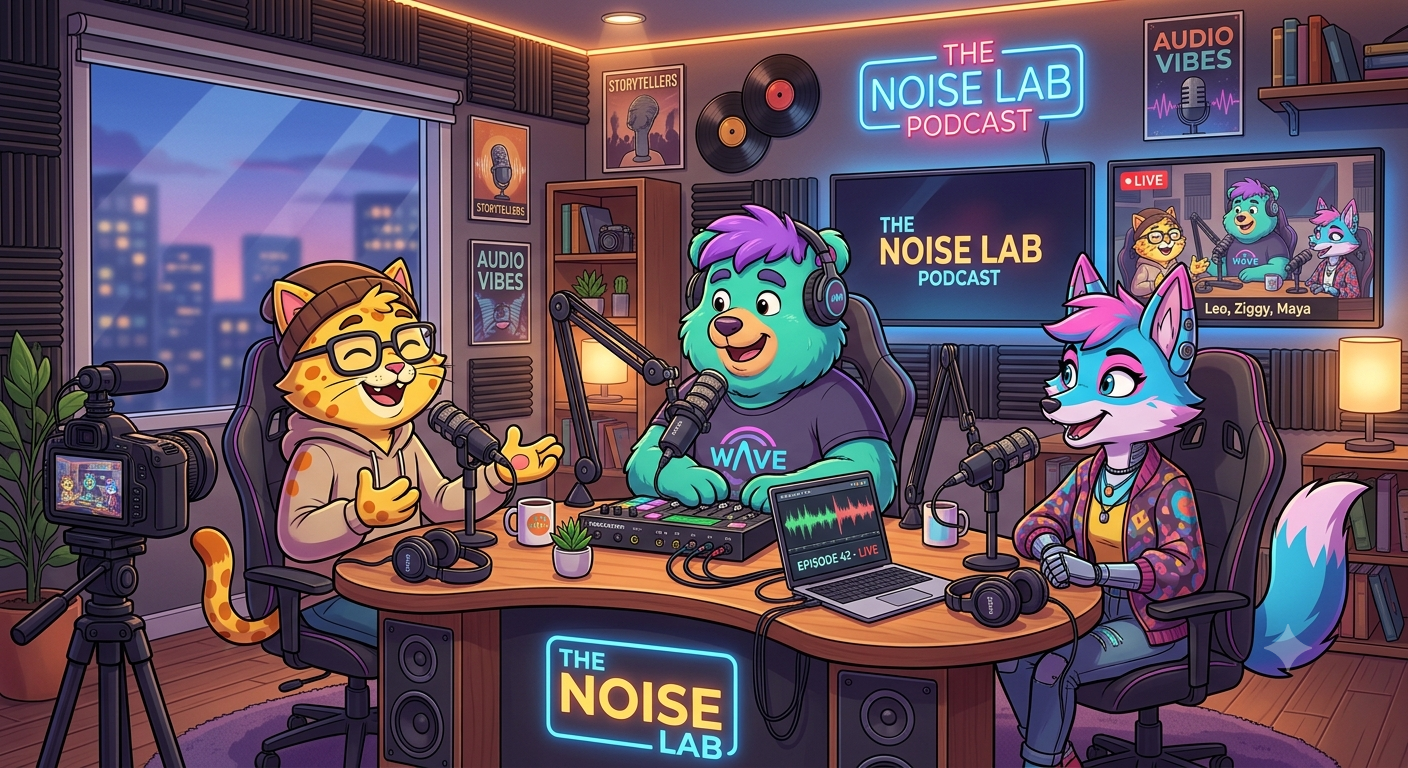
Who Owns Your Audience: You or Spotify and YouTube?
Imagine spending three years building a podcast. You have thousands of listeners. Your YouTube channel has grown steadily. A few podcast clips have gone viral. People recognize your voice, your show name and even your catchphrases.
It feels like you have built an audience.
But here is the uncomfortable question:
How much of that audience actually belongs to you?**
If most of your listeners discover you through Spotify, YouTube, Instagram or another platform, you are building your podcast business on someone else's digital real estate. You may have access to the audience, but you don't necessarily control the relationship.
And in 2026, that distinction matters more than ever.
The New Reality of Podcasting
Podcasting has changed dramatically.
The days when a podcast simply meant an audio file downloaded to someone's phone are long gone. Today, a successful show can exist as an audio podcast, video podcast, YouTube channel, short-form video series, newsletter and online community —all at once.
Think about how people discover podcasts today.
They might see a 45-second clip on YouTube Shorts. Then they watch the full video podcast on YouTube. Later, they listen to the audio podcast while driving. Eventually, they follow the host on Instagram.
One podcast can now create an entire chain of digital interactions.
That is fantastic for creators.
But it also creates a new problem : who controls that chain?
Your Followers Are Not Your Customer List
There is an important difference between having followers and having a direct relationship with your audience.
Suppose you have 50,000 YouTube subscribers.
That sounds impressive—and it is. But YouTube ultimately decides how your videos are recommended, how often subscribers encounter your content and which videos appear in search or suggested feeds.
The same principle applies to other podcast platforms.
Spotify can help your audio podcast reach new listeners. YouTube can introduce your video podcast to millions of viewers. Social platforms can turn a five-minute conversation into a viral clip.
But you don't receive a personal contact list containing everyone who watched your episode.
You have reach, but not necessarily ownership.
That distinction becomes obvious when the algorithm changes.
A podcast can suddenly experience a drop in views or recommendations even though the host hasn't changed anything about the show.
The audience hasn't necessarily disappeared.
Your access to that audience may simply have changed.
The Algorithm Is Part of Your Distribution Team
Creators sometimes talk about algorithms as if they are mysterious forces working against them.
The reality is more complicated.
Algorithms can be incredibly useful.
For a new podcast, algorithmic discovery can do something traditional media rarely allowed: put your content in front of people who have never heard of you.
A small creator can upload a video podcast today and potentially reach viewers thousands of kilometers away tomorrow.
That is one of the great opportunities of modern podcasting.
But there is a trade-off.
The platform that helps you discover your audience also controls the doorway through which that audience arrives.
And that means creators need to think beyond views, downloads and subscriber counts.
Video Podcasting Has Raised the Stakes
The growth of the video podcast makes the issue even more interesting.
Podcasting is increasingly becoming a visual experience. YouTube has become an important destination for podcast discovery and viewing, while Spotify has continued expanding its video podcast ecosystem.
The Reuters Institute has documented this broader transformation from traditional podcasts toward multi-format “shows,” with audiences increasingly watching as well as listening.
In India, this shift is especially noticeable. Long-form conversations are increasingly being produced as visual shows, often designed from the beginning for YouTube as well as audio podcast platforms.
A single interview can now become:
- A full video podcast
- An audio podcast
- YouTube Shorts
- Instagram Reels
- Podcast clips
- Quote graphics
- Newsletter content
- Community discussions
This is smart content distribution.
But it can also make a creator dependent on several algorithms at once.
So Should Creators Leave Spotify and YouTube?
Absolutely not.
That would miss the point.
Spotify and YouTube are incredibly powerful distribution platforms. For many podcast creators, avoiding them would mean voluntarily giving up discovery, reach and potential revenue.
The smarter strategy is to use platforms without becoming completely dependent on them.
Think of Spotify and YouTube as rented distribution channels.
Use them to find people.
Then give those people reasons to build a deeper relationship with your brand.
That might mean an email newsletter, a website, a membership, a private community, live events or another direct communication channel.
The goal is simple:
Don't just collect followers. Build relationships.
From Podcast Audience to Owned Audience
This may become one of the biggest ideas in the creator economy.
A podcast can attract millions of views, but views are temporary.
An audience relationship can last for years.
Imagine two podcast creators.
Creator A has one million monthly views but depends almost entirely on YouTube recommendations.
Creator B has 200,000 monthly views but also has a strong newsletter, an active community and listeners who actively search for new episodes.
Which creator has built the more durable media business?
The numbers alone don't answer that question.
Because reach and loyalty are not the same thing.
A viral podcast clip can bring enormous attention. But the real value comes when someone watches the clip, listens to the full episode, subscribes to your newsletter, joins your community and returns next week because they want to hear what you say—not because an algorithm happened to put your video in front of them.
The Real Asset Isn't the Podcast
This is perhaps the biggest shift creators need to understand.
The podcast itself is content.
The audience relationship is the asset.
Your microphone can be replaced. Your studio can change. Your editing software can change. Spotify can change its interface. YouTube can change its recommendation system.
But if people genuinely care about your voice, ideas and perspective, they will follow you.
That is real audience ownership.
So the question for podcasters in 2026 isn't simply:
“How do I get more listeners?”
It is:
“How do I turn listeners into people who actively choose to come back?”
Spotify and YouTube can give you discovery.
Social media can give you attention.
A great video podcast can give you visibility.
But trust creates loyalty.
And loyalty is what turns a podcast from a content channel into a lasting media brand.
The future of podcasting isn't about choosing between Spotify, YouTube, audio or video. It's about using all of them while making sure your relationship with the audience doesn't belong entirely to any one platform.
Because platforms can rent you attention.
But you have to build the relationship.
Contributed By: Avishek Rakshit
Sonogram: Your Gateway to Podcasting Success
Embark on a journey to unleash your creativity and captivate audiences on a global scale with Sonogram. Our pioneering audio and video podcast hosting and distribution platform is meticulously designed to empower creators like you. By choosing Sonogram, you gain access to a premier hub that seamlessly integrates cutting-edge technology with user-friendly features, ensuring a smooth and efficient podcasting experience.
With Sonogram, you have the opportunity to elevate your content and expand your reach like never before. Our platform offers a comprehensive suite of tools and resources tailored to meet the diverse needs of content creators, from novice podcasters to seasoned professionals. Whether you're passionate about sharing stories, disseminating knowledge, or engaging in meaningful conversations, Sonogram provides the perfect platform to amplify your voice and leave a lasting impact on your audience.
Join Sonogram today and embark on a transformative podcasting journey that will elevate yourbrand, expand your audience, and unlock endless possibilities for growth and success. Let Sonogram be your trusted partner in realizing your podcasting dreams.
Elevate Your Podcasting Game: Switch to Sonogram for Unlimited Possibilities!
Are you dipping your toes into the delightful world of podcasts? Or perhaps you're a budding beginner, itching to launch your own show? Maybe you're already rocking the podcasting scene but craving a platform that's slicker, sassier, and stuffed with all the latest podcasting perks?
Well, guess what? Your podcasting prayers have been answered! Introducing Sonogram – your one-stop-shop for all things audio and video podcasting. Picture this: a platform so smooth, it practically glides through your podcasting journey. We're talking about a place where beginners feel like seasoned pros and where seasoned pros feel like podcasting royalty.
At Sonogram, we've dialed up the fun, cranked up the cool, and dialed in all the bells and whistles a modern-day podcaster could ever dream of. From our user-friendly interface to our arsenal of cutting-edge tools, we've got everything you need to take your podcast from "meh" to magnificent in no time flat.
So why wait? Join the Sonogram squad today and let's turn your podcasting dreams into a reality – one laugh, one listener, and one epic episode at a time. Trust us, your ears will thank you later!
Feature Posts
-
The Future of Podcas
25-03-2024 -
Copywrite and Intell
25-03-2024 -
Harmonizing Copyrigh
26-03-2024 -
Multilingual Podcast
26-03-2024 -
The Impact of Podcas
28-03-2024 -
Podcasting’s Influ
28-03-2024 -
Techniques for Repur
02-03-2024 -

Podcasting And Menta
02-04-2024 -
Exploring ASMR Podca
02-04-2024 -
Exploring Interactiv
17-04-2024 -
50 Ways Professional
18-04-2024 -
Unlocking the Advant
18-04-2024 -
Exploring The Latest
19-04-2024 -

Harnessing the Power
23-04-2024 -
Mastering Podcast Pl
23-04-2024 -
What Are the Best To
25-04-2024 -
Exploring the Best A
25-04-2024 -
Podcast Hosting And
28-04-2024 -
The Rise Of Niche Po
28-04-2024 -
Designing Visually A
28-04-2024 -
The Future of Live S
02-05-2024 -
The Rise of Video Po
06-05-2024 -
Finding Your Voice:
11-05-2024 -

The Potential Of Pod
15-05-2024 -
The Emergence Of Liv
17-05-2024 -
The Relevance Of Pod
17-05-2024 -
Achieving Viral Succ
17-05-2024 -
Patent Issues And Po
17-05-2024 -
Comprehensive Guide
17-05-2024 -

Curating A Podcast:
18-05-2024 -
Local Podcasting: Re
18-05-2024 -
Solopreneur Podcasti
18-05-2024 -
Demystifying Podcast
21-05-2024 -
Dealing With Guest C
27-05-2024 -
How To Optimize Podc
27-05-2024 -
The Science Behind P
27-05-2024 -
Podcasting For Audie
27-05-2024 -

How Artificial Intel
01-06-2024 -
End To End Encriptio
04-06-2024 -

The Impact Of 5G On
04-06-2024 -

The Future Of Podcas
04-06-2024 -

Exploring Niches: 10
05-06-2024 -

Benefits of Using a
06-06-2024 -

What's Next For Podc
07-06-2024 -
Strategies For Integ
08-06-2024 -
Techniques For Optim
09-06-2024 -
Extend Your Podcast'
09-06-2024 -
Emerging Marketting
09-06-2024 -

Should You Consider
09-06-2024 -
From Radio To Podcas
13-06-2024 -
The Magic Of Nostalg
13-06-2024 -
Top Seven Podcast Ho
18-06-2024 -
Best Vlogging Camera
22-06-2024 -
Understanding Podcas
22-06-2024 -
Podcast Network Bene
23-06-2024 -
Best Podcast Platfor
23-06-2024 -
Most Popular Podcast
06-07-2024 -
Best Podcast Hosting
06-07-2024 -
The Rise of Micro-Ce
12-05-2025 -
Podcasting in the Me
12-05-2025 -
The Impact of AI on
23-06-2025 -
Revolutionizing Podc
27-06-2025 -
Podcasting for Busin
31-07-2025 -
The Rise of AI-Power
07-09-2025 -
The Ultimate Video P
23-09-2025 -
Video Podcasts in 20
20-05-2026 -
"The Rise of 'Micro-
21-05-2026 -
Who Owns Your Audien
23-09-2026 -
AI Can Make a Podcas
23-09-2026